Elsewhere
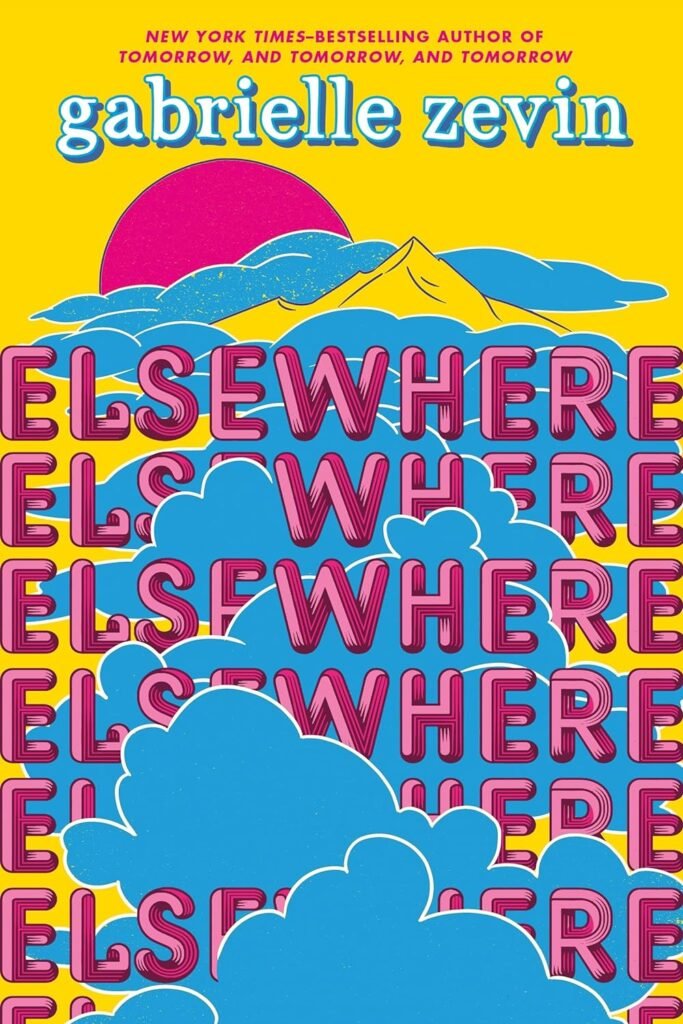
In 2022, I was, in the best way, destroyed by Gabrielle Zevin’s Tomorrow, and Tomorrow, and Tomorrow. I thought it was my first experience with her fiction—until I came across Elsewhere during one of my Steals and Deals searches. At first, I didn’t recognize the title, but then I saw the original (and much better) cover, and realized I’d read it years ago. I remembered loving it. It was time to see if the magic still held.
Spoiler: It does.
At 15, Liz Hall is suddenly, rudely dead—killed by a car while riding her bike. She wakes up aboard the SS Nile, a ship ferrying her to Elsewhere, a kind of afterlife with a catch: the dead age backward until they’re babies, at which point they’re sent back to Earth to start fresh. It’s a system of cosmic recycling, but for Liz, it feels more like a bad joke.
“No college, no driver’s license, no falling in love?” she snaps. Her fury is loud, her grief sharper still. For a teenager, there’s no worse sentence than having adulthood snatched away before it begins. The promise of reincarnation is cold and deeply annoying comfort when all Liz wants is the life she’s lost.
At first, she fights it. She burns through her grandmother Betty’s “eternims” (Elsewhere’s currency) watching her family and friends live on without her from the Observation Decks. These scenes ache with longing and helplessness, a gut-punch for anyone who’s ever wondered how the world might spin without them.
But slowly, and with great reluctance, Liz begins to lean into Elsewhere. She discovers she can speak Canine (yes, talking to dogs is as cool as you’d think) and takes a job counseling newly arrived pets. She makes friends—a young woman named Thandi, a warm but rather serious detective named Owen—and even edges toward something like happiness. She learns to live and even love in Elsewhere.
What makes Elsewhere soar isn’t just its inventive premise but the messy, very human world Zevin builds around it. Forget gauzy clouds and glowing halos; this afterlife is rife with complications. Liz’s grandmother falls for a man decades younger in life experience, despite their bodies now being peers. Liz herself falls in love, only to find herself navigating a painfully awkward love triangle when her boyfriend’s late wife shows up. Zevin doesn’t shy away from these tangled, bittersweet moments, and they hit all the harder for their stark beauty.
And then there’s Liz’s backward ebb through time. Watching her lose the ability to read as she heads into toddlerhood—she can’t make it through a passage from Tuck Everlasting, another book that will rip out and then, with grace, restore your heart—is gut-wrenching. Here, there is no romanticizing losing oneself to time, even in a place as lovely as Elsewhere. Death, as rebirth, is gentler on these isles, but, still, it comes for all.
Yet Elsewhere isn’t a bleak read. It’s luminous, bursting with warmth, humor, and the joy of forging connections in unexpected places. At its heart, it’s about seeing that there is meaning, vibrant and gorgeous, in what little time we have—whether we’re aging forward, backward, or standing still.
When I first read this book, I loved it for its originality and heart. Now, years later, it resonates even more deeply. Elsewhere is tender, sharp, and deeply human—this a story that lingers long after the last page. Life, in Zevin’s here and hereafter, is messy, finite, and utterly worth living. Especially if you can talk to dogs.