The Finest Print
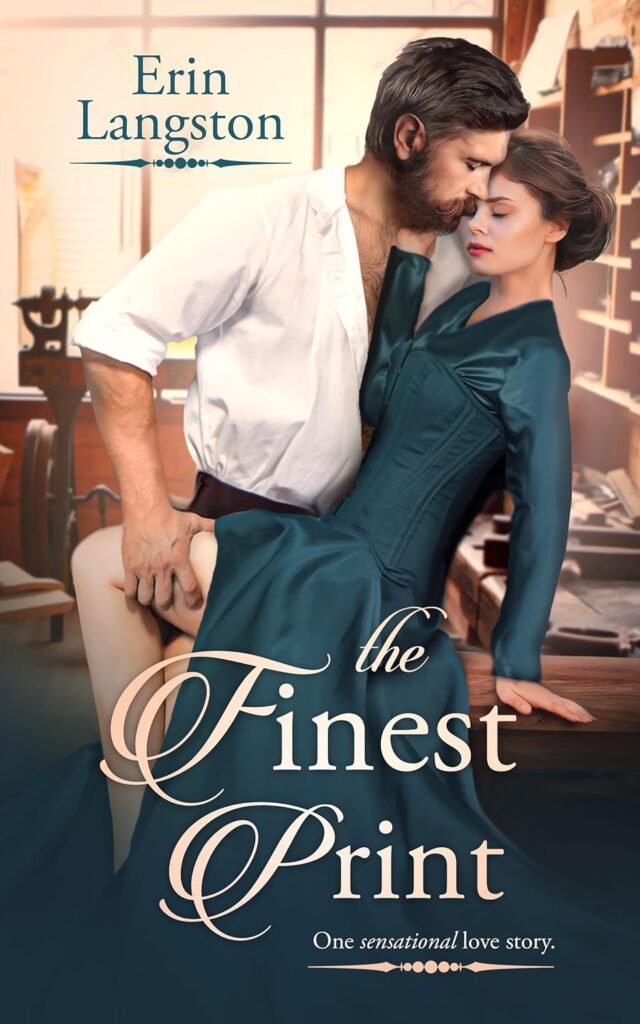
Looking for a well-written historical romance that also delves into Victorian-era newspaper taxes? The Finest Print offers both. You’ll also learn about penny bloods—now called penny dreadfuls—the era’s available birth control, and even how to set type. As she did in her marvelous Forever Your Rogue, Langston bolsters her fiction with a wealth of fascinating historical detail.
Four years ago, Belle Sinclair, niece of Cora, the heroine of Forever Your Rogue, dumped her officious fiancé, Scotland Yard Detective Sergeant Lawrence Duncan, after he (she’s sure deliberately) poured tea all over the manuscript she’d been writing. Duncan, ever the ass, spread rumors about her after their broken engagement, and since then, most of polite society either shuns or ignores her.
This, as it turns out, is fine with Belle. She’s free to write her novel, visit her father at Old Bailey, where he is a judge, and spend time with her family. Sure, it sometimes stings to watch her younger sister, Lena, go to parties and balls Belle isn’t invited to, but she’s content, and most importantly, free to write.
One afternoon, after an unpleasant encounter with Duncan—now a Detective Inspector—Belle finds solace in a tucked-away garden at the Old Bailey. There, she meets a tall, handsome man with an American accent.
Ethan Fletcher’s last few weeks have been hellish. He crossed the Atlantic in a coffin-sized cabin and endured an open second-class train ride from Liverpool to London, all to take over the print shop he’d inherited. But once he arrives, his solicitor informs him that the shop is collateral for a loan his deceased uncle had taken out. Ethan thought he was on the verge of financial freedom, only to realize he’s lost everything—his job at a Boston newspaper and his savings—for a legacy that might slip through his fingers. He has just ten weeks to pay off one hundred pounds sterling, or he’ll lose the print shop and the building it’s in. Really, the only good thing that’s happened to him recently is meeting a beautiful woman in a quiet garden.
A few days later, Belle and Ethan meet again, and this time, they realize they can help each other. Ethan can print Belle’s work—she can turn the chapters of her novel into stories—and sell them as penny bloods. Ethan can earn the money he needs to pay off the press, and Belle can finally be published.
The obstacles are many. Belle must lie to her very accepting parents about where she goes each day, and though she’s using a pen name, she knows being outed as the author of such gory, lowbrow work would ruin her reputation. Ethan must make money every week to satisfy his uncle’s lender. He’s essentially betting everything on the penny dreadfuls, including the reams of paper his uncle left behind.
This paper is essential to the plan. As long as Ethan uses it, he doesn’t have to pay the two cents a page stamp tax. Langston’s author’s note offers fascinating context:
The so-called taxes on knowledge were egregious and effectively barred the working class from accessing the news. Newspapers had an easier time in America—penny papers started circulating in the 1830s—but in England, publishers faced a decades-long struggle until the taxes were repealed (1853 for advertising, 1855 for news, 1861 for paper).
As Belle and Ethan, along with the wonderful staff at the print shop, work tirelessly, they fall in love—slowly, but convincingly. But Belle is the daughter of a judge, with an aunt who’s a doyenne of the ton. Ethan is a low-born American who, if the penny bloods don’t sell, will be left with nothing and forced to return to the States. The odds against them are steep, and Langston makes the reader feel every bit of their anxiety.
I very much liked Ethan and Belle, along with their friends and family. The romance between the two is sweet, and they are kind, compassionate leads who treat everyone they meet with respect and care. From almost the moment they meet, they fall hard for each other, and the barriers to their happy ending are all external. This lack of internal conflict makes the romance a bit less engaging than the rich history Langston explores.
I confess, I struggle with flawless leads, and here we have two. Ethan and Belle are unfailingly good—in every situation, they make the best and most ethical choice. They champion literacy, use birth control, and always consider others. I admired them, but they didn’t enchant me.
While the romance isn’t as strong as I’d have liked, the historical context is fascinating and brilliantly done. I enjoyed reading The Finest Print for all that it taught me. Langston’s passion for her subject matter is palpable, and I’m now vastly better informed about the stamp acts. Readers who love history, in particular, will find much to appreciate here.