The Rose Field
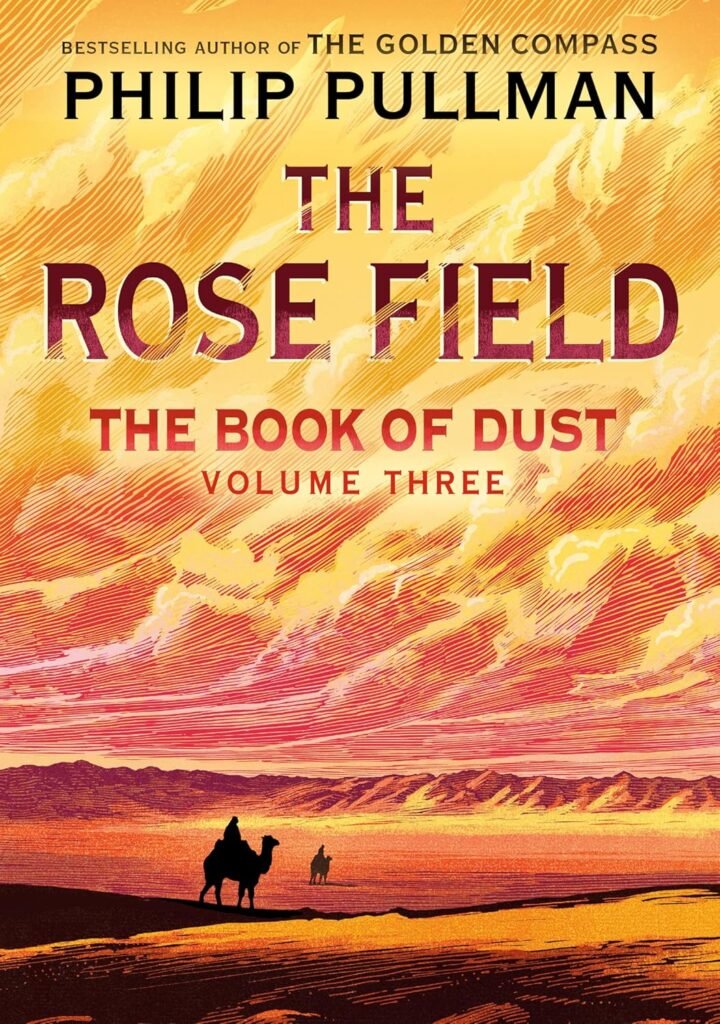
If you were to ask me what the greatest fantasy series ever is, I’d not hesitate to say: His Dark Materials by Philip Pullman. I read the trilogy when it was first published and can still feel the heartbreak that, over twenty-five years ago, left me sobbing in the grocery store parking lot as I read the conclusion of The Amber Spyglass. The books’ heroes, Lyra Belacqua and Will Parry, are among my favorites in fiction. Thus, when in 2017 Sir Philip published the first of a second trilogy focused on Lyra, I couldn’t wait to again immerse myself in his prose.
Now, some 3,500 pages later, with the conclusion of the final book, The Rose Field, the author has finished, he says, the story of Lyra Belacqua (Will is not a part of these books), and I am not happy.
Any book by Pullman is, even if deeply flawed, a gift. Compared to much of what I read this year, this novel has incredible world building and indelible characters. But still, The Rose Field is a disappointment.
If you’ve not read the five books that precede this one, don’t bother. It’s densely referential and even I, who’ve read the earlier books more than once, struggled to remember characters and plot points. Additionally, the second trilogy has a far less straightforward plot and, more than once, I had to go back to The Book of Dust and The Secret Commonwealth and revisit what had occurred there.
At the end of The Secret Commonwealth, Lyra, painfully separated from her daemon Pan, is trying to get to a red building in the middle of a Central Asian desert. There, she believes, is a window into a world with roses that are necessary to enable Dust. Pan believes that the building will have something in it that will help Lyra find again her imagination which he is certain she has lost. Also trying to get there is Malcolm Polstead, a scholar who, in book two, seemed to be a love interest for Lyra. All three are sought by the all-powerful Magisterium, run by Marcel Delamere, Lyra’s uncle, a man obsessed with power and control.
Much of The Rose Field is a road trip story told from our three leads. On their travels, they encounter gold-loving gryphons, environmentally anxious witches, evil sorcerers, villains, soldiers, and spies. Again and again, Malcolm, Lyra, and Pan are in great danger and must use their prodigious wits to continue their treks. It’s exciting, and were this book just an adventure story, I’d have enjoyed it more.
But this trilogy promised to tell Lyra’s story, and over the almost 700 pages of the novel, Lyra and the task she has had in all the books—to save the world—gets lost. Myriad characters distractingly come and go, endless side plots add little, and, in the midst of all this literary chaos, Lyra and her mission slip away. Worse, she is ineffectual for much of the novel—it is Malcolm who seems the more heroic, even though he’s far less compelling than she.
Still, I read and read, wanting to know what would happen to Lyra and her world. Would she and Pan again become the inseparable pair they once were? Would the Magisterium be vanquished? And what of Will, those other worlds and the windows he closed? I wanted, after all these years, closure.
Instead, the ending arrives suddenly and leaves much unresolved. Worse—so much worse—is that in this book the power of the first trilogy is startlingly diminished. The rules that were so brilliantly established in His Dark Materials, rules that forced Will and Lyra to live in separate worlds, are now framed as fungible, possibly misrepresented. Everything that gave the original trilogy such power is just gone. Lyra’s response to this is negligible. Presumably she could now possibly find Will or at least think about doing so, but she doesn’t even seem to think about it. The reader is left with a story that ends too soon and contradicts its origins.
Pullman has written about how difficult this book was for him to write. And it’s clear he is furious with our world, with its destruction of the natural world, venal leaders, and rapacious businessmen. This is a story where capitalism is the true villain and the long tail of colonialism destroys almost all it touches. His fury becomes stronger over the course of the book and ultimately is a castigation of the modern world. This feels wrong. Honestly, I think the Lyra of His Dark Materials would hate this book, with its lack of hope, disinterest in love, and free-ranging anger.
I didn’t hate it, but I didn’t love it, and I almost wish I’d never read it, it so rewrites a story I revere. It’s a book I’d only recommend to those who’ve read the first two in The Book of Dust trilogy, and even then, with caution. To all others, I’d say: read His Dark Materials and stop. It remains one of the great gifts fantasy has given us; The Rose Field, and even the other books in the second series, pale beside it.